When we talk about property prices, the conversation usually starts with the median sale price.
But there’s another number that can tell us plenty about how much buyers are paying for property: the price per square metre.
New analysis from realestate.com.au, using PropTrack data, has revealed how much buyers are effectively paying for each square metre of property across Australian suburbs.
The analysis calculates the mean price per square metre by dividing the listing asking price by the property size. For houses, this is based on land size, while units are assessed using floor area.
Nationally, the median asking price for a house sits at $1,535 per square metre, which has increased 10.1% over the past 12 months.
While some of Australia's most expensive suburbs can command tens of thousands of dollars per square metre, regional markets such as Wagga Wagga offer a very different picture.
So, how does the cost per square metre vary across Wagga Wagga?
We’ve taken a closer look at some of the city’s most established and popular suburbs.
What Does Price Per Square Metre Actually Tell Us?
Price per square metre provides another way of looking at property values.
A suburb with a higher figure isn't necessarily more expensive overall. Smaller blocks can result in a higher price per square metre, while larger properties can have a lower price per square metre despite having a higher total sale price.
As realestate.com.au notes, factors including block size, subdivision, development and the mix of properties coming to market can all influence the figure from year to year. Lower sales volumes can also result in larger fluctuations.
For buyers, it can provide useful context when comparing properties with different land sizes.
For sellers, it can help demonstrate how the value of land varies between different pockets of Wagga Wagga.
At Fitzpatricks, our agents see these differences play out across the Wagga market every day.
Ashmont: An Accessible Point into the Market
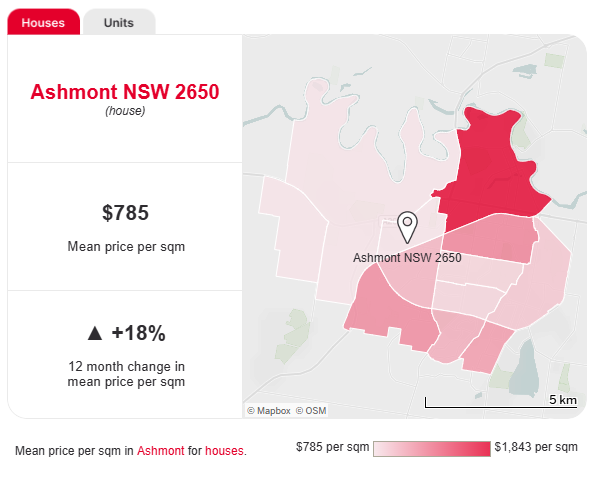
Mean asking price per square metre: $785
12-month change: +18%
Ashmont is an established residential suburb with a mix of family homes, schools, parks and local amenities. Its generally larger residential blocks and established housing stock contribute to a lower price per square metre than areas with smaller, newer lots, while its location still provides convenient access to the wider Wagga Wagga area.
Boorooma: A Growing Residential Pocket
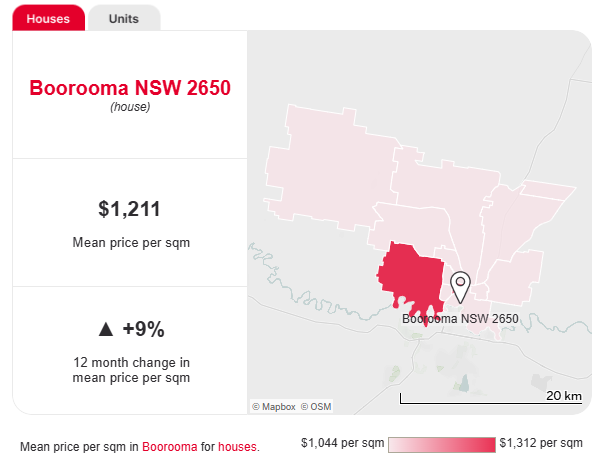
Mean asking price per square metre: $1,211
12-month change: +9%
Boorooma’s relatively high price per square metre reflects its newer housing stock and modern residential subdivisions, where blocks tend to be more compact. Its proximity to Charles Sturt University, shopping and northern Wagga amenities also adds to the suburb’s appeal.
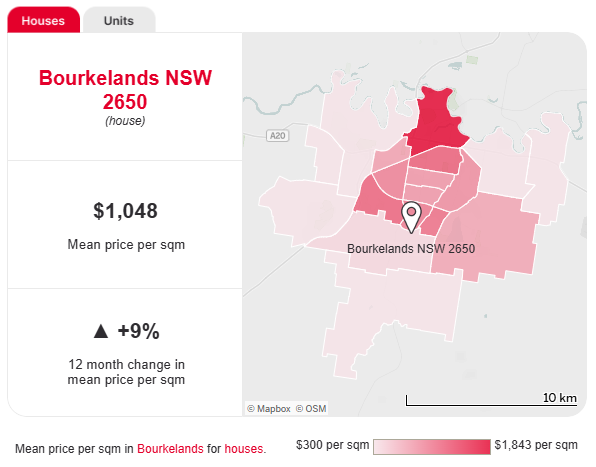
Bourkelands: Modern Family Living
Mean asking price per square metre: $1,048
12-month change: +9%
Bourkelands sits just above $1,000 per square metre, with its modern family homes and established residential setting contributing to the figure. The suburb’s convenient access to schools, parks and shopping, combined with a mix of block sizes, creates a varied property market.
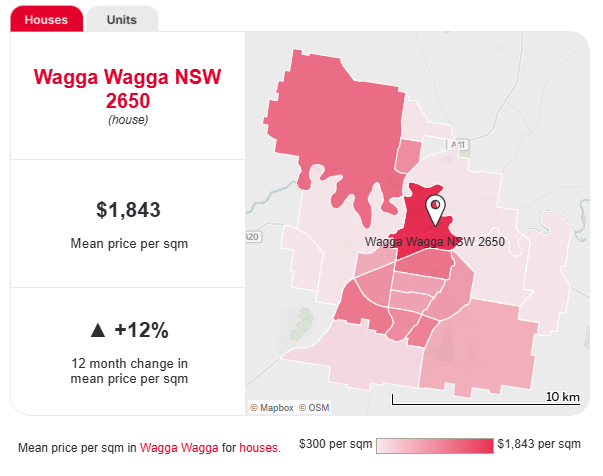
Central Wagga: Paying for Location
Mean asking price per square metre: $1,843
12-month change: +12%
Central Wagga records the highest price per square metre of the suburbs analysed. Its premium reflects the scarcity and convenience of property close to the CBD, with cafes, restaurants, retail, employment, schools and medical services all within easy reach. More compact blocks and a mix of character homes and established properties also contribute to the higher figure.
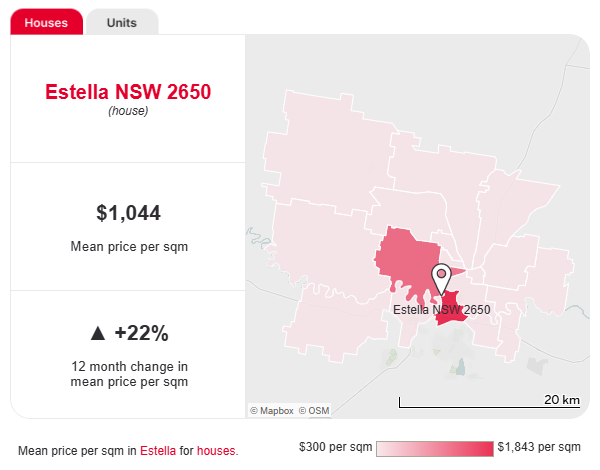
Estella: A Growing Suburb
Mean asking price per square metre: $1,044
12-month change: +22%
Estella’s price per square metre reflects its position as one of Wagga Wagga’s major growth areas, where newer homes are commonly built on relatively compact residential lots. Its proximity to Charles Sturt University, modern housing and continued development have helped establish the suburb as a popular residential location.
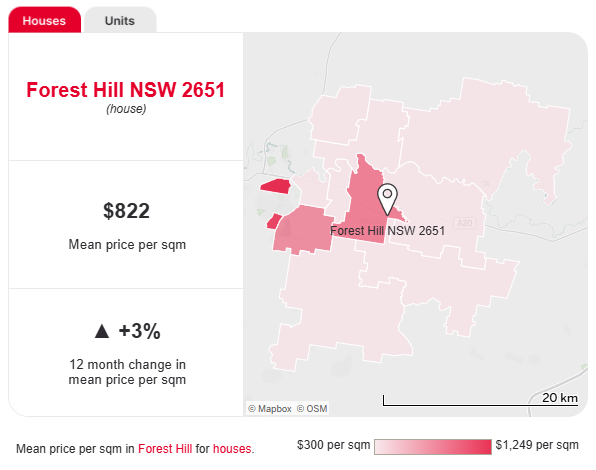
Forest Hill: More Land for Your Money
Mean asking price per square metre: $822
12-month change: +3%
Forest Hill’s lower price per square metre is influenced by the larger blocks that are common throughout the suburb. As an established community with a more spacious residential character, buyers are often purchasing a greater amount of land compared with properties in more compact parts of Wagga Wagga.
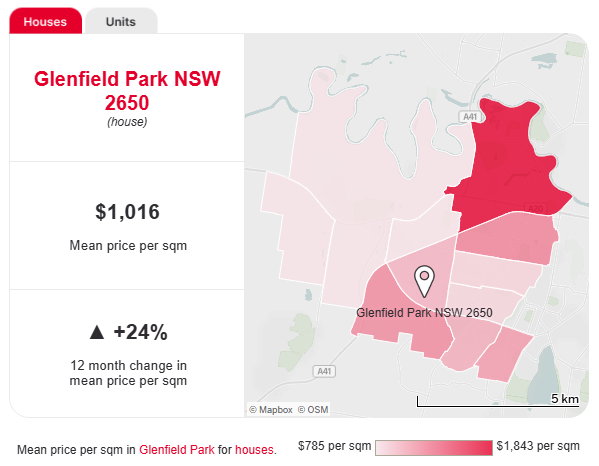
Glenfield Park: Family Living and Convenience
Mean asking price per square metre: $1,016
12-month change: +24%
Glenfield Park sits around the $1,000 per square metre mark, reflecting its established family-oriented housing market and convenient range of amenities. South City Shopping Centre, schools, sporting facilities and parks add to the suburb’s appeal, while its mix of established and newer homes creates variation in block sizes and property values.
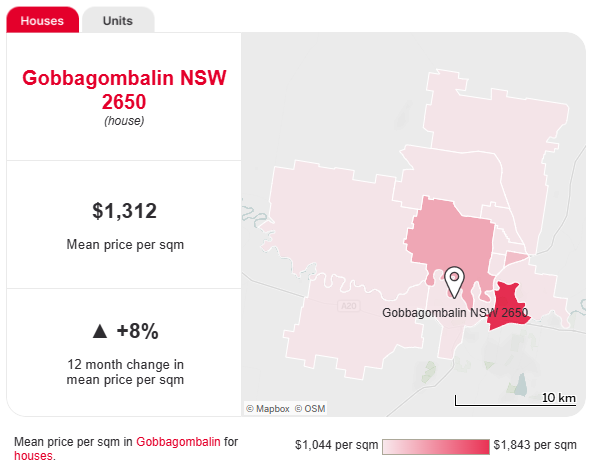
Gobbagombalin: New Development and Smaller Blocks
Mean asking price per square metre: $1,312
12-month change: +8%
Gobbagombalin has a higher price per square metre than many of Wagga Wagga’s established suburbs, in part due to its newer subdivisions and smaller, more efficiently designed blocks. Contemporary homes, modern streetscapes and proximity to Charles Sturt University further contribute to its appeal as a newer residential community.
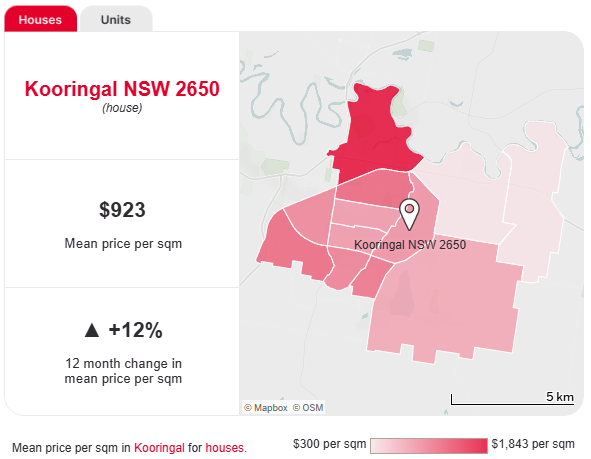
Kooringal: Established Convenience
Mean asking price per square metre: $923
12-month change: +12%
Kooringal’s price per square metre reflects its established residential market and broad mix of property types. Larger blocks and older homes are common throughout the suburb, while Kooringal Mall, schools, parks and local services provide the convenience that has made the area a long-standing choice for families.
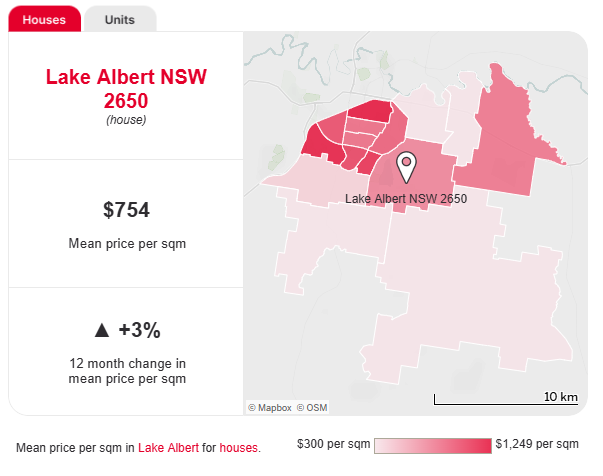
Lake Albert: Lifestyle Comes at a Price
Mean asking price per square metre: $754
12-month change: +3%
Lake Albert records a lower price per square metre, largely reflecting the larger blocks found throughout this established suburb. Properties also benefit from the area’s strong lifestyle appeal, with the lake, walking tracks, open spaces and recreational facilities creating a sought-after residential setting without the compact land sizes found closer to the CBD.
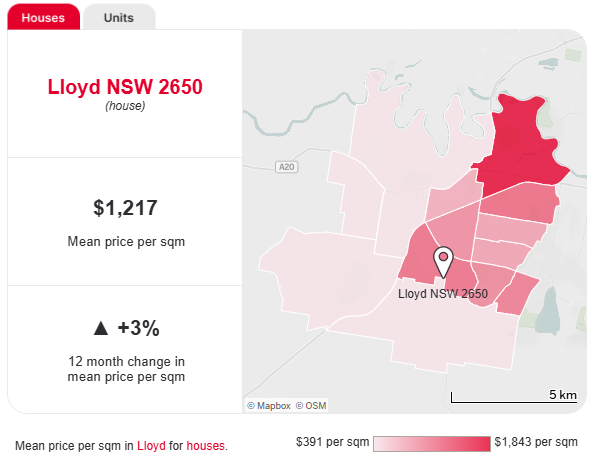
Lloyd: Newer Homes and Modern Blocks
Mean asking price per square metre: $1,217
12-month change: +3%
Lloyd’s higher price per square metre reflects its newer residential character, with contemporary homes typically built within modern subdivisions. The relatively consistent lot sizes, newer construction and family-focused design of the area contrast with established suburbs where larger blocks are more common.
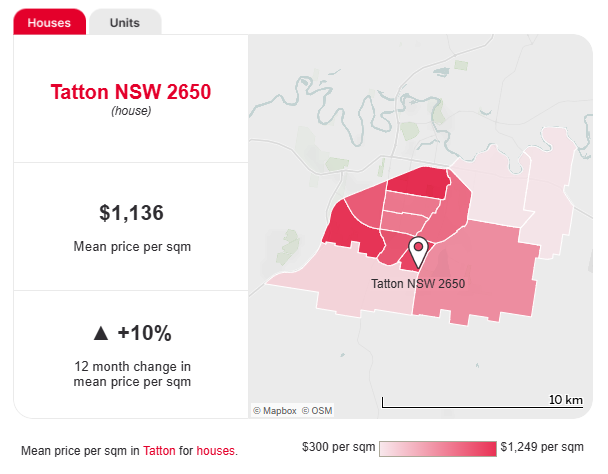
Tatton: Premium Homes on Established Blocks
Mean asking price per square metre: $1,136
12-month change: +10%
Tatton’s price per square metre reflects its established appeal, with substantial homes, attractive streets and convenient access to schools, shopping and other amenities. While many properties feature larger blocks, the quality and scale of housing in the suburb contribute to its position above a number of surrounding areas.
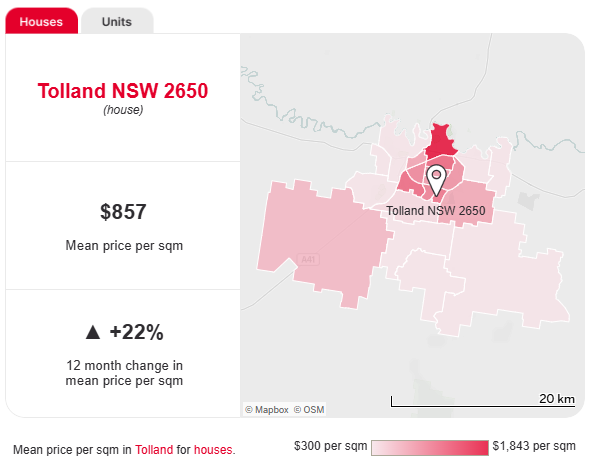
Tolland: Established and Accessible
Mean asking price per square metre: $857
12-month change: +22%
Tolland’s lower price per square metre is partly influenced by its established housing stock and generally generous residential blocks. The suburb offers traditional family homes, mature streets and convenient access to schools, parks and southern Wagga amenities, giving it a different property profile from newer, more compact developments.
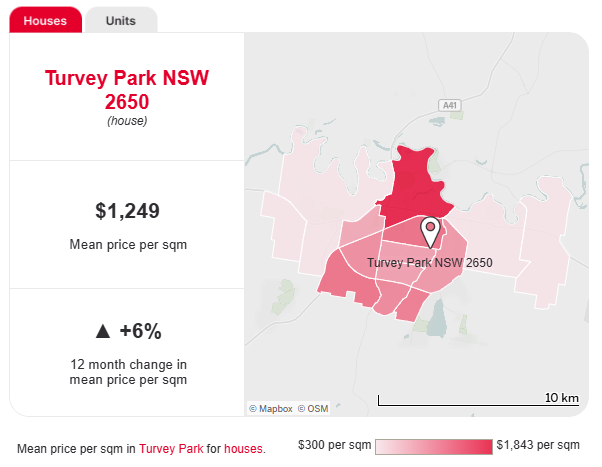
Turvey Park: Established Homes and Larger Blocks
Mean asking price per square metre: $1,249
12-month change: +6%
Turvey Park’s relatively high price per square metre reflects its established inner-city location and proximity to the CBD. Character homes, mature streetscapes and access to schools, parks and central amenities all contribute to the suburb’s appeal, while the mix of established properties and block sizes adds further variation.
Uranquinty: Space and Lifestyle
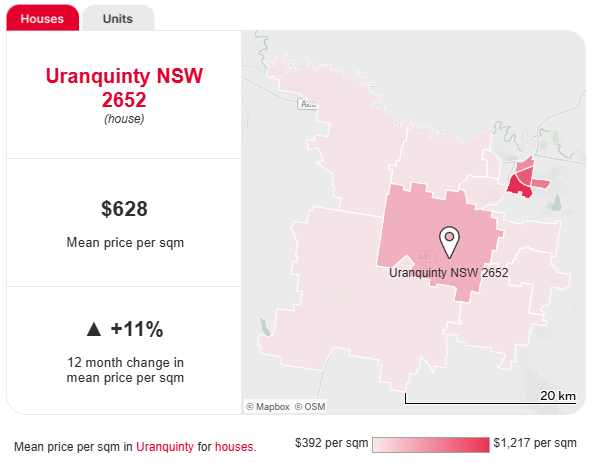
Mean asking price per square metre: $628
12-month change: +11%
Uranquinty records the lowest price per square metre among the suburbs analysed, with larger blocks being a key factor. The established village setting offers more land and a spacious residential environment than many of Wagga Wagga’s newer subdivisions, while still providing convenient access to the city and surrounding areas.
What Does This Mean for Wagga Buyers and Sellers?
Price per square metre is not a replacement for the median property price, comparable sales or local market knowledge.
Instead, it is another useful piece of the property puzzle.
A smaller block in a sought-after location can command a higher price per square metre than a much larger property further from the CBD. Likewise, a larger property can have a lower price per square metre while still achieving a higher overall sale price.
This is why comparing properties purely on dollars per square metre can be misleading without considering the broader picture.
Land size, location, condition, home size, improvements, zoning and the individual characteristics of a property all play a role.
For buyers, however, the metric can be particularly useful when comparing properties with different block sizes.
For sellers, it provides another way of understanding how their property sits within the wider Wagga Wagga market.
The Bigger Picture
The latest realestate.com.au analysis shows that price per square metre varies dramatically across Australia, with location and scarcity playing a significant role.
In Wagga Wagga, the differences between suburbs are much more subtle, but they still reveal an interesting story about how buyers value land across the city.
From established suburbs such as Turvey Park, Kooringal and Lake Albert through to newer growth areas including Estella, Lloyd and Gobbagombalin, the amount buyers pay for each square metre reflects more than just the land itself.
It reflects location, lifestyle, housing stock, block size and the way each suburb has developed over time.
At Fitzpatricks, we combine local knowledge with current market data to help buyers and sellers understand not just what a property is worth, but why.
This article references analysis published by realestate.com.au on 16 September 2026, based on PropTrack data. The price-per-square-metre figures are asking-price measures rather than achieved sale prices and can be influenced by the mix, size and number of properties coming to market. Market conditions can change, and individual properties may differ significantly from suburb-level averages.
You might also be interested in

Jul 2, 2026
Buying or Selling Property? Australian Real Estate AML/CTF Laws Now in Effect
From 1 July 2026, new Anti-Money Laundering and Counter-Terrorism Financing (AML/CTF) laws will apply to Australian real estate services. You may have started hearing more about these changes and wha